

The Research Behind MiraColt
Explore the growing body of research examining MiraColt’s applications in neurological rehabilitation, balance, mobility, and therapeutic engagement. Building on research into the therapeutic benefits of live equine motion and horse-riding therapies, discover the clinical findings and emerging evidence informing MiraColt’s use across diverse populations—from Parkinson’s disease and fall-risk goals to pediatric therapy.
A 2021–2022 Cal Poly senior engineering project also examined MiraColt alongside other mechanical-horse designs, highlighting its multidirectional motion. Explore how clinical research and simulator design are advancing movement-based therapy.
MiraColt Studies at a Glance
Compare the reported findings, study populations and session protocols.
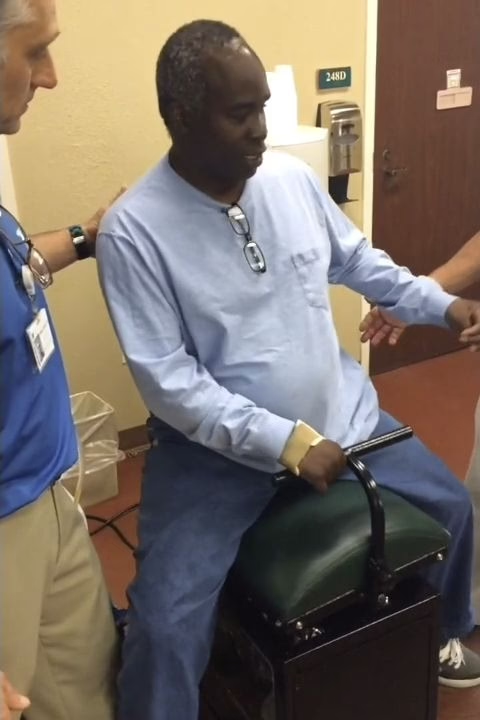
Static Balance in Parkinson’s Disease
Sharpened Romberg and Single-Leg Stance improved significantly. Timed Up and Go and Dynamic Gait Index changes did not reach statistical significance.
Methods and Study Context
The abstract does not state participant count. These short-term conference findings do not establish durable benefit or reduced actual falls. Completed live-horse comparative results require confirmation.
Engagement in Children With Autism
Participants completed activities on MiraColt and on a live horse in separate visits. No statistically significant difference in engagement was found (p=.92).
Methods and Study Context
This small pilot used two 20-minute visits and a new engagement measure. An absence of statistical significance does not demonstrate equivalence between MiraColt and live-horse therapy.
Gait and Balance in Older Adults
Four of nine treatment participants initially at or above the Timed Up and Go fall-risk threshold moved below it.
Methods and Study Context
This proof-of-concept report describes twenty enrolled participants, with ten treatment and three control participants completing after dropout and group changes. Small, imbalanced groups and crossover limit interpretation. The findings do not establish reduced actual falls.
Projects That Explore New Applications
Baylor Autism Intervention
Baylor’s multidisciplinary project description outlines a 15-week MiraColt program for children ages 6–12, focused on behavior, language and movement. Its published schedule lists sessions through May 2022.
CanAssist / UVic / VTRA
CanAssist integrates MiraColt with its Motivex interface and virtual riding trails to support access to riding activities. The UVic feature describes technology development and participation.
Earlier Device Studies
Explore earlier Chariot device research and the mechanics of riding motion.
Texas Woman’s University Parkinson’s Study
Eight participants completed twice-weekly sessions for six weeks. The accompanying dissertation identifies the device as BearBack, an earlier Chariot Innovations device, rather than the current commercial MiraColt model.
Baylor / University of Hartford Mechanical-Horse Study
Researchers studied head and trunk movement responses in nine healthy participants. This biomechanics study examines movement mechanisms rather than patient outcomes.
The paper identifies the inventor’s Chariot connection but does not name the commercial MiraColt generation.
Study summaries updated October 20, 2026. Publication type and tested-device context are identified for each source.
Riding-Simulator Engineering & Design
These sources explore simulator design, motion fidelity and engineering comparisons. They provide context for the broader field; clinical findings from MiraColt use are presented above.
Cal Poly: Therapeutic Mechanical Horse
Cal Poly engineering students compared MiraColt with other mechanical-horse designs using a Quality Function Deployment matrix. The project discusses MiraColt’s multidirectional walking-horse motion; its design scores do not establish clinical superiority.
Methods and Study Context
The comparison reflects sponsor-specific engineering needs and student design judgments. The report does not publish an overall market ranking.
Cal Poly: Mechanical-Horse Scope of Work
A Cal Poly mechanical engineering team described MiraColt’s cam-based, six-degree-of-freedom motion while reviewing existing therapeutic-riding devices. This student design project for Jack’s Helping Hand informed a mechanical-horse prototype; it did not compare patient outcomes.
Methods and Study Context
This October 2022 scope of work is hosted in Cal Poly’s 2023 project record. It is an engineering planning document rather than a clinical study.
Six-Degree-of-Freedom Robotic Riding Simulation
Engineers combined recorded horse-motion data with a six-degree-of-freedom robotic platform and responsive saddle, neck and tail mechanisms. Two equestrian referees informed design refinements; 68 sports-club members then provided user feedback.
Methods and Study Context
This evaluated the authors’ prototype. Satisfaction and perceived exercise effects were survey responses, rather than clinical outcomes or evidence of MiraColt effectiveness.
Designing a Simulator Around Human Walking
A single-motor cam-and-follower prototype was designed to reproduce walking-related pelvic motion. Video analysis compared a healthy user’s movement on the simulator with treadmill walking, reporting similar pelvic-angle patterns alongside differences in smoothness.
Methods and Study Context
The study tested the authors’ device, not MiraColt. A formal participant sample size was not reported; clinical trials in children with cerebral palsy were identified as future work.
Connect the Research With Your Goals.
Explore MiraColt options or talk with our team about your setting.